Article: ʻŌkolehao and The Kingdom of Hawaiʻi's Overthrow
ʻŌkolehao and The Kingdom of Hawaiʻi's Overthrow
“Rep. Waipuilani presented a resolution that the House request the Attorney General to order the Marshal to publicly pour out the 20 gallons of okolehao that are now stored in the Police Station. He said that according to existing laws the okolehao could not be sold at public auction.
But while it remains there it may be used by the men there, or it may be constantly sampled, or the okolehao may be miraculously transformed into water, as the Police Station is the seat of wonders.”
Noble Marsden asked if a select committee was required to pour out the contents? If so, the committee must taste the liquor first.

Rep. Kapahu moved an amendment that the okolehao be poured into the sea, so as to prevent a conflagration, as kulu is an inflammable substance.
Rep. Ashford proposed another amendment to the motion, that such pouring be done in the presence of members of the House, and that each member to be supplied with tin cups. [Laughter]
Rep. Bush moved the previous question. Carried. The resolution was referred to the Temperance Committee.
***
“The same committee reported on the resolution of Rep. Waipuilani, calling for the pouring out of 20 gallon of okolehao now at the Station. This the committee think should be done, as the law makes the possession of okolehao penal.
Rep. R. W. Wilcox thought that would be a criminal waste. He moved it be delivered to the Noble for Maui (Thurston) to take to Chicago as a specimen of Hawaiian spirits. As the hon. Noble did not drink, it was certain that the same amount would arrive as was delivered to him.

Rep. White supported the motion. Let the hon. Noble how those Americand how much better our okolehao is than their sandpaper gin. Who knows what the result may be?
Rep. Kamauoha took the same ground. The amendment was carried.”
***
ʻŌkolehao in the Time of the Overthrow
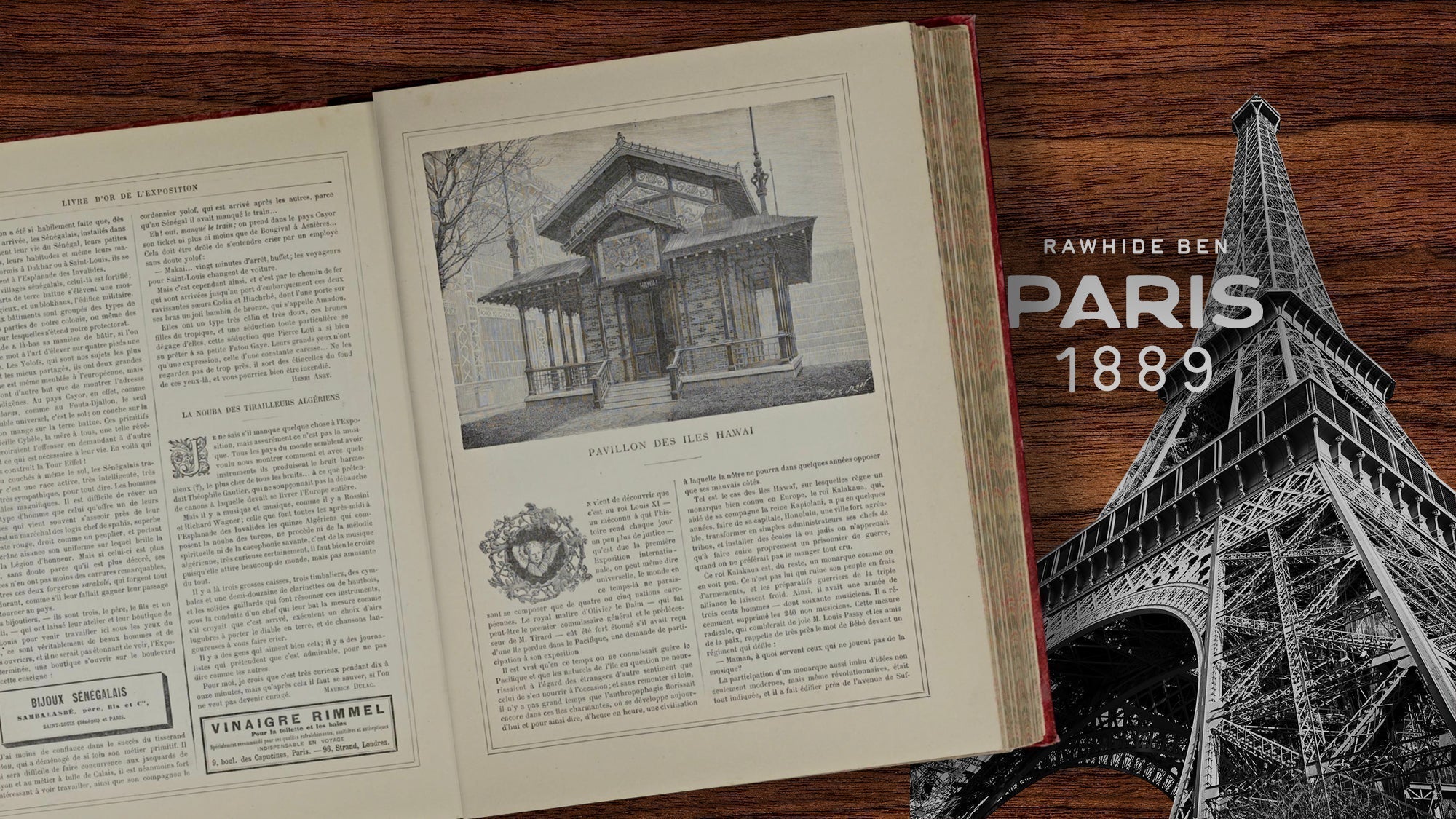
On August 26, 1892, Representative Robert Wilcox moved in the Hawaiian Kingdom's Legislature to send the spirit to represent the Kingdom at the 1893 World's Columbian Exposition in Chicago. It arrived on the heels of the earlier 1889 Paris Exposition, where ʻōkolehao won international recognition (and a bronze medal) for the Kingdom of Hawai‘i.
It was a striking proposal. ‘Okolehao, while widely beloved in the Kingdom of Hawai‘i’s Legislature, was the same liquor that remained effectively illegal to make (or distill) in households accross the islands. Nevertheless, it was a symbol of the Hawaiian nation abroad.
That contradiction was not new. Kingdom law had grown steadily more restrictive through the 19th century. The 1892 law introduced to regulate the sale of liquor production through licensure passed through the Legislature to the Queen’s desk, where Queen Lili‘uokalani duly signed it into law on January 13, 1893.

The law required that the lawful production of ‘ōkolehao required a liquor production license priced at $250. That equals roughly to $8,700 in today's dollars. For the ordinary Hawaiian families distilling tī root in valleys often hidden from the authority of such law, that fee was well out of reach. The result was the formal criminalization of a practice.
By this time, the Constitution of the Kingdom of Hawai‘i had been re-written as a result of a previous coup d‘etat in 1887 to severely restrict the power of the monarchy. The Kingdom was in a state of political turmoil. Lili‘uokalani, who had become Queen of the Hawaiian Islands in late 1891, wished to pursue political reform through a new constitution.
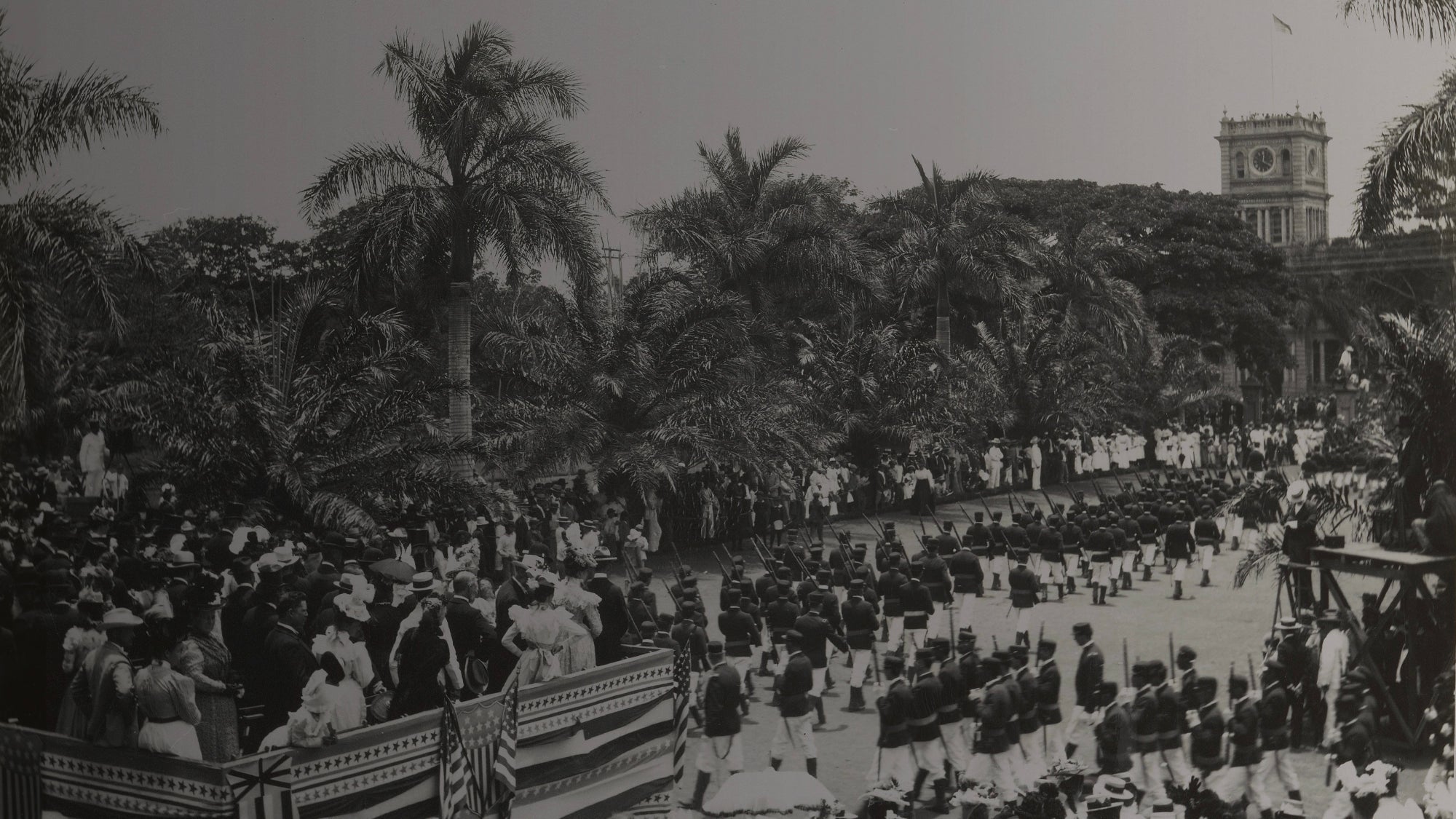
In January 1893—the same month that Liliuokalani signed a law to permit ‘ōkolehao’s production to only wealthy distillers—the political ground of the Hawaiian Kingdom shifted. Four days later, a group of American and European businessmen, backed by U.S. Minister John L. Stevens and a company of U.S. Marines, overthrew Queen Lili‘uokalani and the Hawaiian Kingdom government. The monarchy gave way first to a Provisional Government and then, in 1894, to the Republic of Hawaiʻi.
The new regime's appetite for pursuing illicit distillers did not fade with the change in flag. If anything, enforcement continued uninterrupted. Laws like the one signed by Lil‘uokalani just days before monarchy’s overthrow were still enforced in the Republic of Hawai‘i.
In March 1896, a posse of officers led by Sheriff Pahia pushed into “the most mountainous region of Waiahole, in the Koʻolau Mountains of Oʻahu, hunting a distiller known only as Kluse. They found his small hut “hidden among the dense growth of bushes” with five jugs of okolehao in the hut. Not long after, a related case reached the Republic's own Supreme Court, where a Molokaʻi man named Akoni was arrested and prosecuted after okolehao was discovered in his possession aboard a schooner. from remote mountain valleys to interisland vessels.
It remains ironic, however, as both the later Kingdom of Hawai‘i and the Republic of Hawai‘i both regarded ‘ōkolehao’s reputation with some sense of pride. “It was so peculiarly Hawaiian and so peculiarly, meritorious that it appealed to Hawaiian loyalty,” one 1906 news report later joked. “So strong was this appeal to Hawaiian loyalty that even the Provisional Government in 1893, and its successor the Republic of Hawaii in 1899 winked at the violation of law necessary to make worthy and appropriate qualities of it for exhibition at the Exposition in Chicago and in Paris, and when it was triumphant in both places there was a thrill of Hawaiian pride even in the Missionary breast.”
The years surrounding the overthrow capture ʻōkolehao's central paradox: internationally celebrated, domestically outlawed, and made almost exclusively by the Hawaiians who could least afford the license to do so legally.
By the time Hawai‘i was annexed into the United States in 1898, the government’s attitude towards ‘okolehao was destined to remain adverse, although its tone would shift in a different, more American direction.
Sources:
Journal of Debate in the Legislature of the Kingdom of Hawai‘i
July 26, 1892
google.com/url?q=https://evols.library.manoa.hawaii.edu/server/api/core/bitstreams/6d758ffb-32d8-40ec-bc25-5387cd5bc406/content&sa=D&source=docs&ust=1787896252626789&usg=AOvVaw1fn-qrXpr0YgjAmURGIRZT
Journal of Debate in the Legislature of the Kingdom of Hawai‘i
August 26, 1892
https://evols.library.manoa.hawaii.edu/server/api/core/bitstreams/73377d91-93ad-4481-9867-2717b7aaf131/content
https://evols.library.manoa.hawaii.edu/server/api/core/bitstreams/00d6a5b0-c47c-428d-9554-93a69c808567/content
https://evols.library.manoa.hawaii.edu/server/api/core/bitstreams/4712d26c-311d-4083-93d3-299c3f7abdfc/content
https://evols.library.manoa.hawaii.edu/server/api/core/bitstreams/56855ba3-053d-45a4-9652-fa81b5c8b634/content